30 October 2026
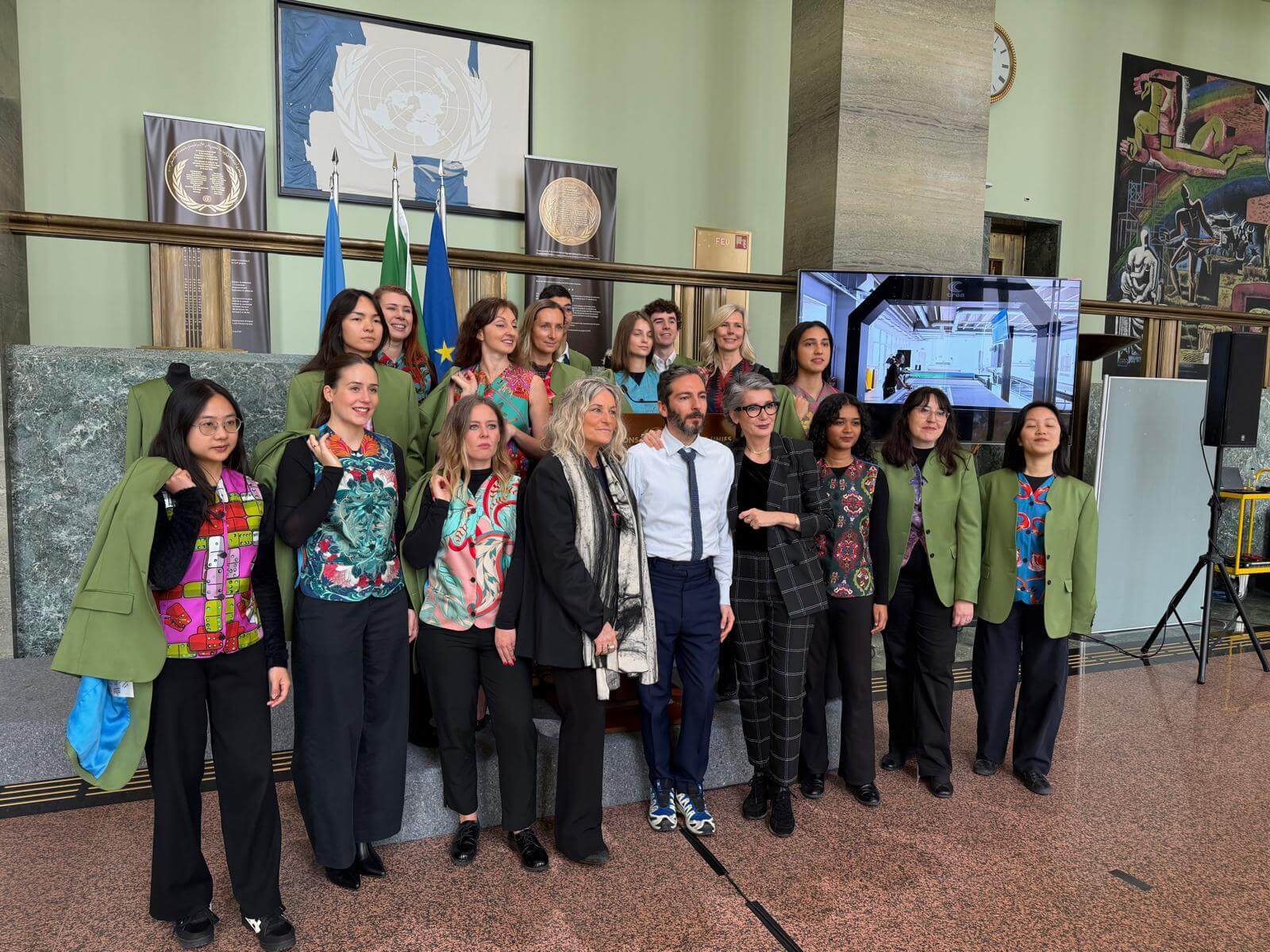
Unveiled at the Palais des Nations, the uniforms worn by visitor guides are the first garments to be produced entirely through the Slow Fiber supply chain: a project bringing together expertise, craftsmanship and responsibility, from raw materials to finished product.
Since 29 October 2026, the guides who welcome thousands of visitors to the Palais des Nations in Geneva every year have been wearing new uniforms, created through a project that brings together design, responsibility and production transparency. These are the first garments to be produced entirely through the Slow Fiber supply chain, demonstrating the tangible value of collaboration between member companies and the potential to build a traceable, circular production model.
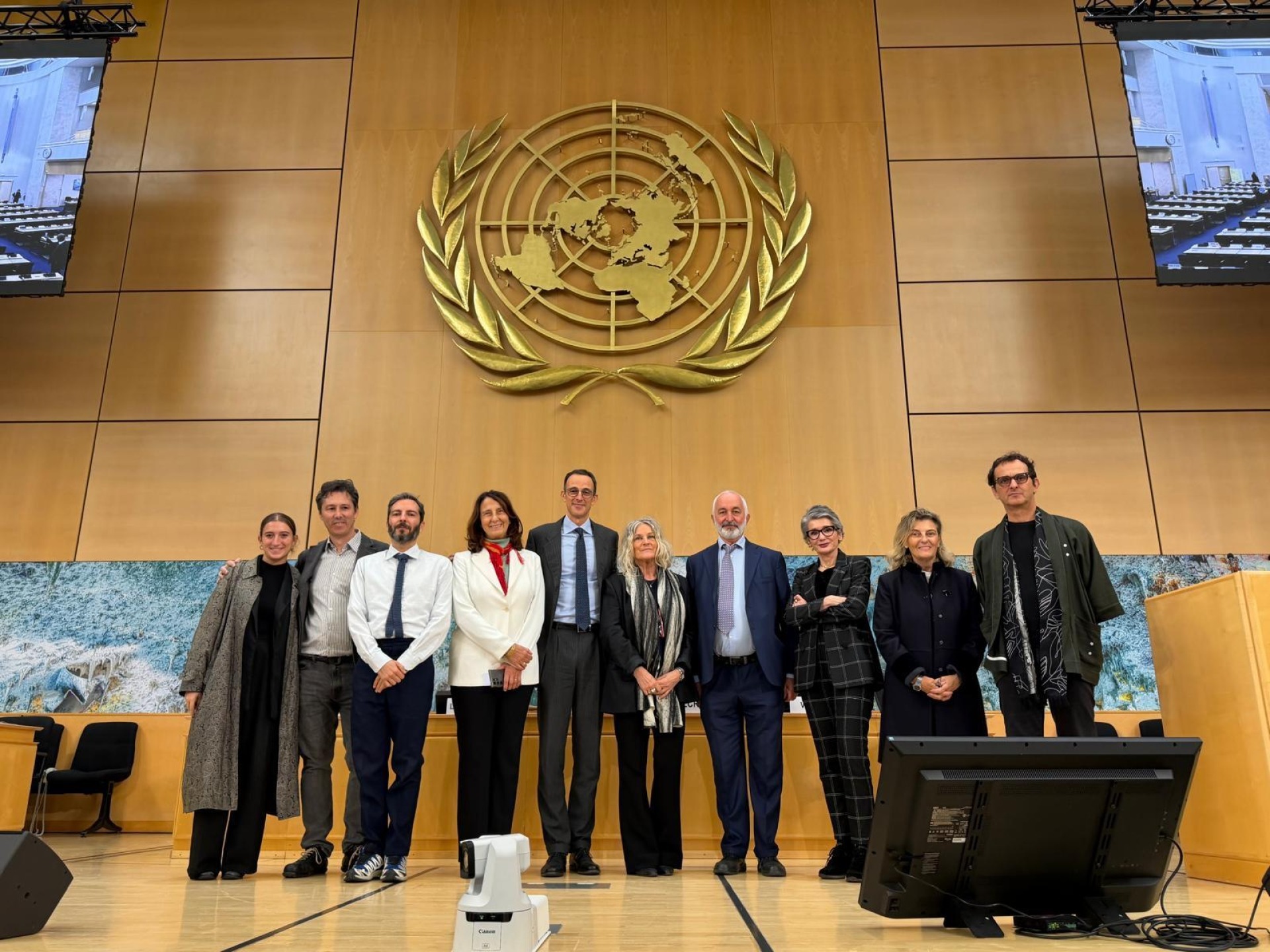
The new uniforms were presented by the United Nations Office at Geneva, in collaboration with Fondazione Pistoletto Cittadellarte and the Permanent Mission of Italy to the United Nations, in the year marking the Office’s 70th anniversary.
The collection was designed by Tiziano Guardini, under the guidance of Cittadellarte Fashion B.E.S.T., and draws inspiration from Michelangelo Pistoletto’s Third Paradise, a symbol of the balance between nature, society and innovation. Coordination of the supply chain, made up entirely of Slow Fiber member companies, was entrusted to MagnoLab. Its co-founder, Marco Bardelle, Vice-President of Slow Fiber, brought together the different manufacturing skills and expertise required to produce the garments.
The guides are the first point of contact between the United Nations and visitors to the Palais des Nations. Their uniforms are therefore more than just functional garments: they also serve as a means of communicating the institution’s values, including dialogue, inclusion and a commitment to a more sustainable future.
The decision to involve Slow Fiber stemmed precisely from this need: to create a garment that expresses these principles through a consistent production process in which every stage can be identified and traced, from raw materials to garment making.
The project demonstrates how collaboration between different manufacturing businesses can turn shared values into tangible results. This, after all, is the strength of the Slow Fiber model: bringing together specialised and complementary expertise while recognising the contribution of each company throughout the entire supply chain.
The jacket, made from pure olive-green wool, features a UN-blue lining and is paired with a printed silk waistcoat. The colour scheme also carries a specific meaning: for the United Nations, olive green evokes peace and social responsibility, while blue reflects the organisation’s institutional colour.
Each stage of production was entrusted to a company within the network:
• 100% wool yarn: Di.Vè
• Weaving: Achille Pinto
• Dyeing and finishing: Tintoria Finissaggio 2000
• Cutting and sewing: Pattern
• Linings: Tintoria Stamperia di Lambrugo
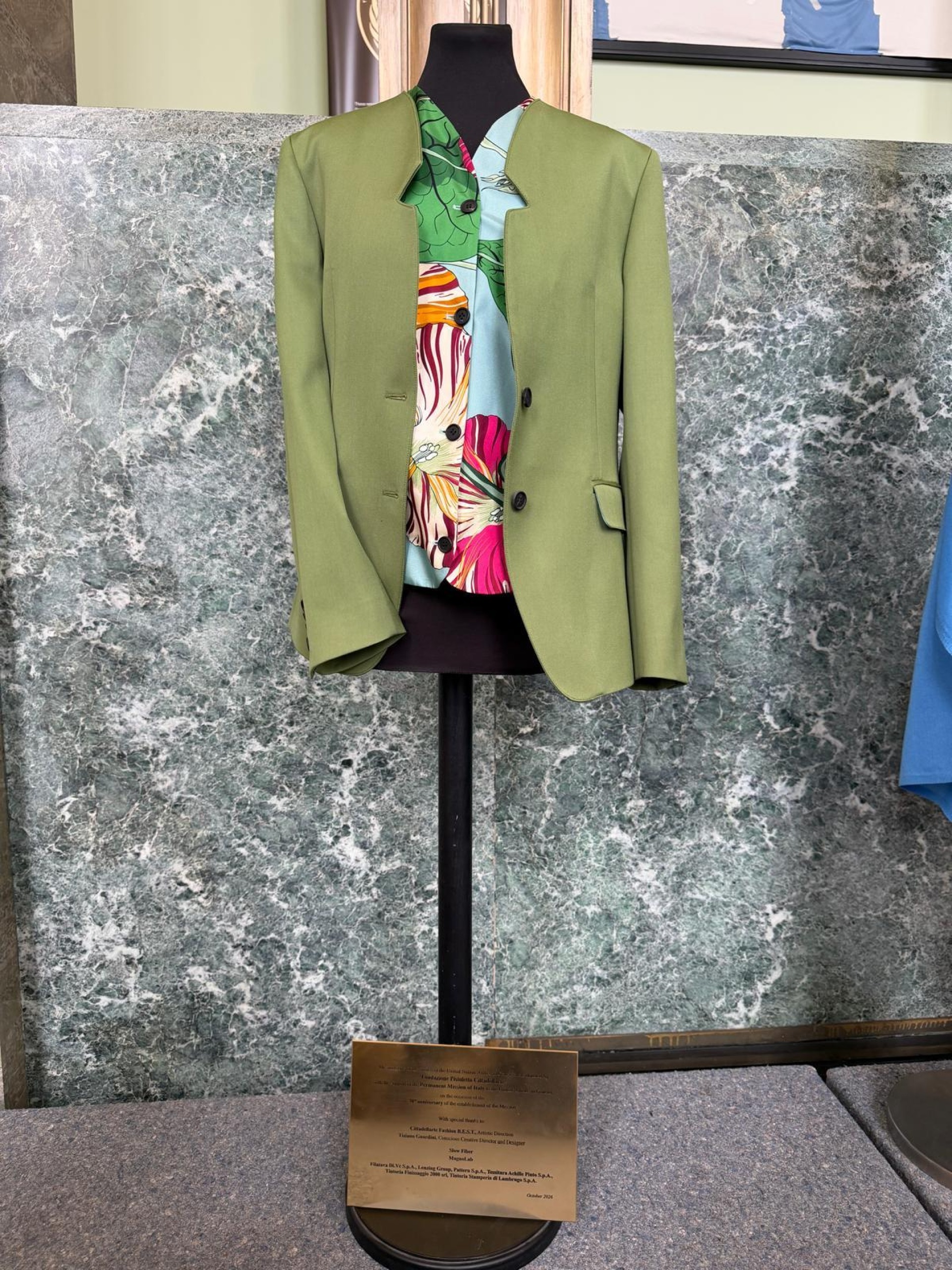
The result is a garment that embodies the work and expertise of several manufacturing businesses, each responsible for a specific stage of the production process.
“This project demonstrates the value of a network such as Slow Fiber, which brings together the expertise and craftsmanship of its member companies to create a product through a fully traceable and responsible supply chain,” says Marco Bardelle. “This achievement not only highlights the value of the finished garment, but also recognises the contribution of every company involved and the collective effort that made it possible.”
