
13 February 2026
The supply chain is a cultural heritage to be valued. This was the message Slow Fiber brought to the 65th edition of FILO – International Exhibition of Yarns and Fibres, the leading international trade fair for the yarn and fibre sector, on the occasion of the opening ceremony.
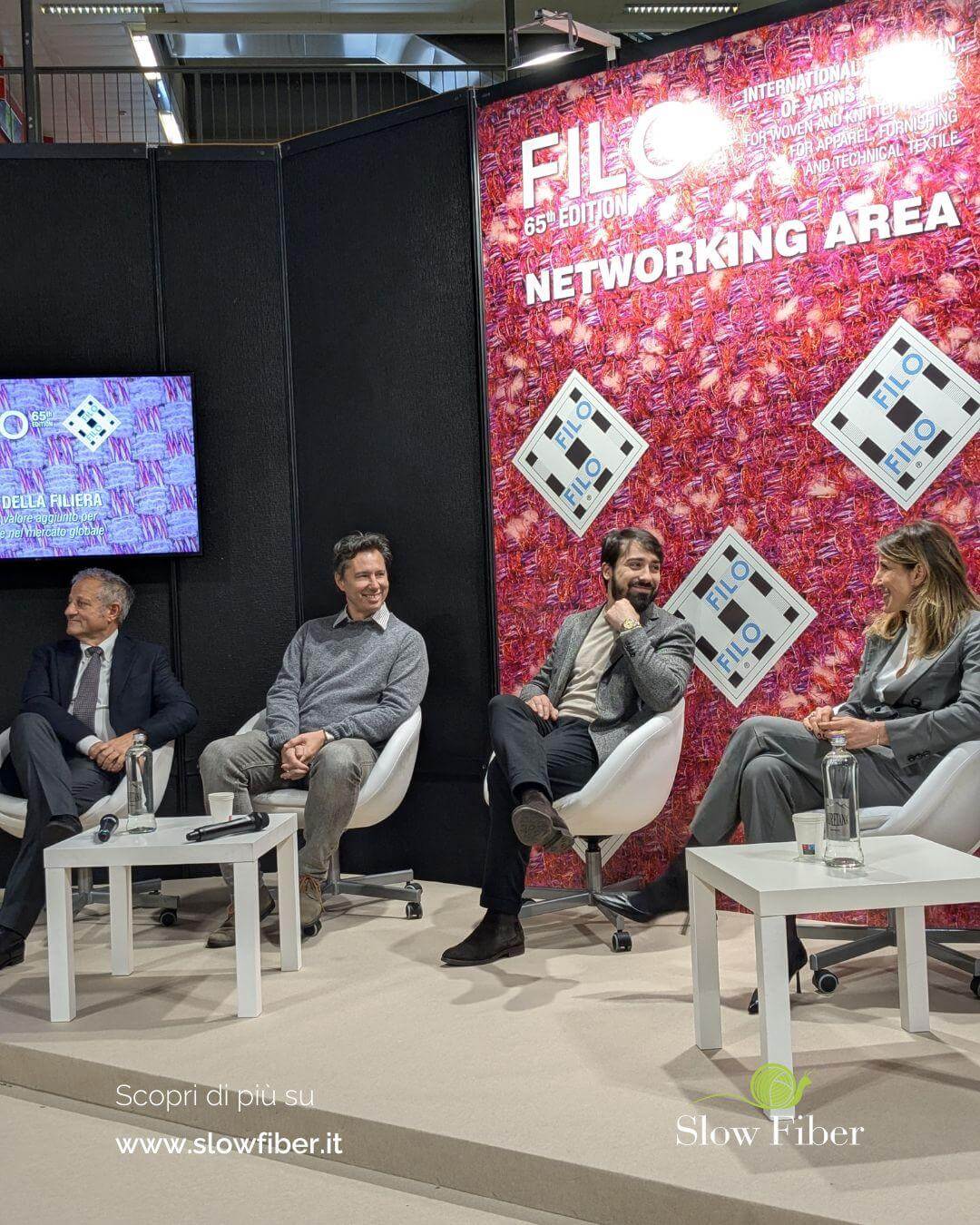
The network of virtuous Italian companies operating across the textile supply chain took part in the round table “The Thread of the Supply Chain: synergies and added value to compete in the global market", highlighting how the future of textiles will depend on the ability to work as a system and to communicate the value generated throughout the entire production chain.
Alongside representatives from FILO, the Unione Industriale Biellese, the Piedmont Region, and companies from the sector, Slow Fiber reaffirmed a key principle: the competitiveness of the industry cannot be based on price alone.
"To make the real value of products visible, it is essential to educate consumers and build a culture of the supply chain. This would make it possible to understand not only what lies behind the finished product, but also what it generates along its entire supply chain journey," Slow Fiber stated. "When value remains invisible, the market ends up rewarding price alone. The goal should always be to make visible the quality, responsibility, and expertise that set sustainable and virtuous production apart."
This reflection was further explored in the Sustainability Space, during the talk "InsideOut – Visible and Invisible Values in the Next-Generation Wardrobe." The discussion highlighted the need for a new language capable of bringing production and consumption closer together, making the real value of the supply chain visible.
Demonstrating this vision, seven companies from the Slow Fiber network were present — companies that, despite operating in the same market, have chosen to keep collaborating on strategic issues to strengthen the system as a whole.
"At a time when the European textile supply chain faces increasingly complex challenges, building a network is no longer an option but a necessity," the network concluded. "Collaboration between companies is one of the most effective tools for protecting and enhancing the industrial and cultural heritage of Made in Italy."
